Bramall Lane: The Historic Home of Sheffield United Football Club
Bramall Lane stands as a cornerstone of football history, recognized as the oldest professional football stadium still in use worldwide. Located in the heart of Sheffield, this Sheffield football stadium has witnessed the evolution of the sport from its early days. Originally built for cricket in 1855, it transitioned to host football matches, becoming the home of Sheffield United since 1889. With a bramall lane capacity of around 32,050 all-seated spectators, it blends historic charm with modern amenities, making it a must-visit for fans.
What makes Bramall Lane special? It’s not just a Sheffield United stadium; it’s a venue that hosted the world’s first floodlit match in 1878 and pivotal games that shaped football rules. The stadium Sheffield locals cherish has seen record crowds, like the 68,287 attendees for a classic encounter, highlighting its enduring appeal. Whether you’re curious about the bramall lane seating plan or its role as a Sheffield FC stadium in early years, this guide covers it all.
For beginners, Bramall Lane represents football’s roots—simple pitches evolving into grand arenas. Intermediates might appreciate its architectural quirks, while experts value its influence on the game. As a stadium Sheffield proudly claims, it connects past and present, offering lessons in sports heritage. Dive into its story to understand why this Sheffield United stadium capacity and design continue to draw crowds.
(Word count: 285)
Table of Contents
- The Rich History of Bramall Lane
- Bramall Lane Capacity and Modern Features
- Exploring the Bramall Lane Seating Plan
- Bramall Lane’s Role in Sheffield Football
- Architectural Highlights and Renovations
- Visiting Bramall Lane: Tips for Fans
The Rich History of Bramall Lane
Bramall Lane’s journey began in 1855 as a cricket ground, named after the Bramall family who owned the land. It quickly became a multi-sport venue, hosting Sheffield’s early football experiments. By 1862, it saw its first football match, marking the start of its legacy as a Sheffield football stadium.
In the 19th century, Bramall Lane was pivotal in unifying football rules, hosting inter-association games between Sheffield and London teams. It also staged the final of the world’s first football tournament, the Youdan Cup. As a Sheffield FC stadium for some early fixtures, it helped establish organized play.
Sheffield United took residence in 1889, transforming it into their permanent home. The stadium Sheffield embraced hosted international matches and even concerts, showcasing versatility. Its cricket era ended in 1973, fully dedicating to football.
Key milestones:
- First floodlit game in 1878 using electric lights.
- Record attendance in the 1930s, packing over 68,000 fans.
- Post-war expansions to meet growing demand.
This history makes Bramall Lane more than a Sheffield United stadium—it’s a living museum of the sport.

Bramall Lane in its early days, serving as a cricket pitch before becoming a football icon
thestar.co.uk
Bramall Lane Capacity and Modern Features
Bramall Lane capacity stands at 32,050, all seated for safety and comfort. This Sheffield United stadium capacity reflects renovations that balanced heritage with contemporary needs. Compared to larger venues, its intimate setup enhances the atmosphere, making every seat feel close to the action.
Modern features include:
- High-quality floodlighting for evening games.
- Digital scoreboards and video screens for enhanced viewing.
- Hospitality suites offering premium experiences.
The stadium Sheffield United calls home accommodates diverse crowds, with accessible seating for all fans. Sheffield United stadium capacity ensures it hosts top-tier matches without overwhelming scale.
For context, here’s a comparison table:
| Feature | Bramall Lane | Average Premier League Stadium |
|---|---|---|
| Capacity | 32,050 | ~40,000 |
| All-Seated | Yes | Yes |
| VIP Seats | 31 | Varies |
| Press Seats | 28 | ~50 |
These elements keep Bramall Lane relevant in modern football.

Modern Bramall Lane, showcasing its capacity and urban setting
en.wikipedia.org
Exploring the Bramall Lane Seating Plan
The Bramall Lane seating plan divides into four main stands, each with unique views. The Kop Stand, holding about 10,200, is the heart of home support. Opposite, the Bramall Lane Stand often houses away fans, up to 3,000.
Key sections:
- Tony Currie South Stand: Family-friendly with premium suites.
- John Street Stand: Executive boxes and clear pitch views.
- Corners: Affordable options for casual visitors.
Away supporters typically get the lower tier of Bramall Lane Stand for safety. The plan ensures good sightlines everywhere, vital for a stadium Sheffield fans frequent.
Use this simplified seating overview:
- Kop: Passionate atmosphere.
- South Stand: Comfortable seating.
- John Street: Business networking.
- Bramall Lane: Versatile for visitors.
Check official maps for exact blocks.
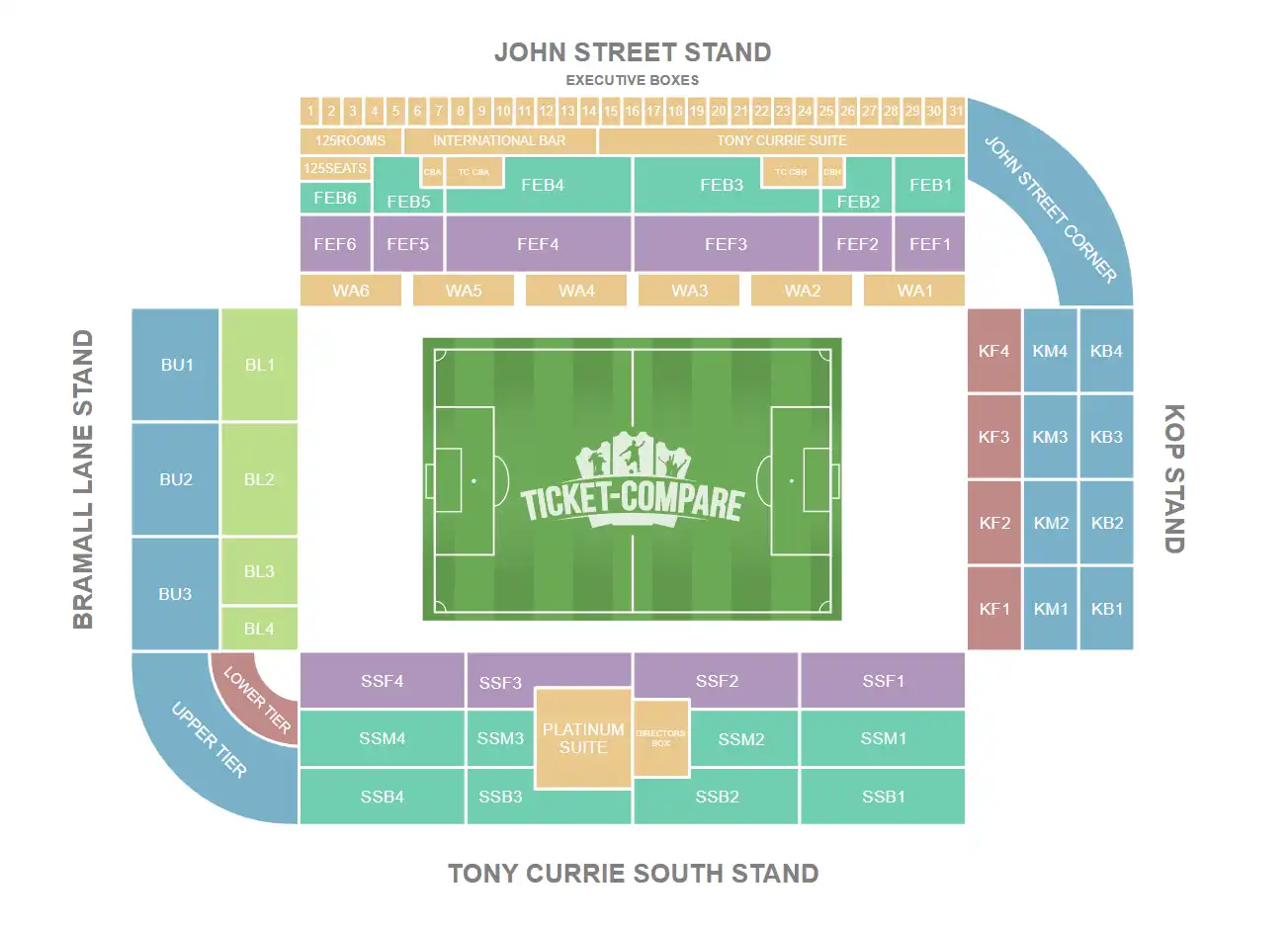
Detailed bramall lane seating plan for optimal matchday planning
ticket-compare.com
Bramall Lane’s Role in Sheffield Football
As the premier Sheffield football stadium, Bramall Lane anchors the city’s sporting identity. Home to Sheffield United, it fosters community pride and rivalries. Though not primarily a Sheffield FC stadium today, it hosted their early games, linking to football’s origins.
Its role extends beyond matches—hosting training, youth events, and community programs. The Sheffield United stadium capacity allows for large gatherings, boosting local economy through tourism.
Benefits for fans:
- Iconic chants echoing in the stands.
- Proximity to city center for easy access.
- Legacy of hosting England internationals.
Bramall Lane embodies Sheffield’s steel-city grit in football.
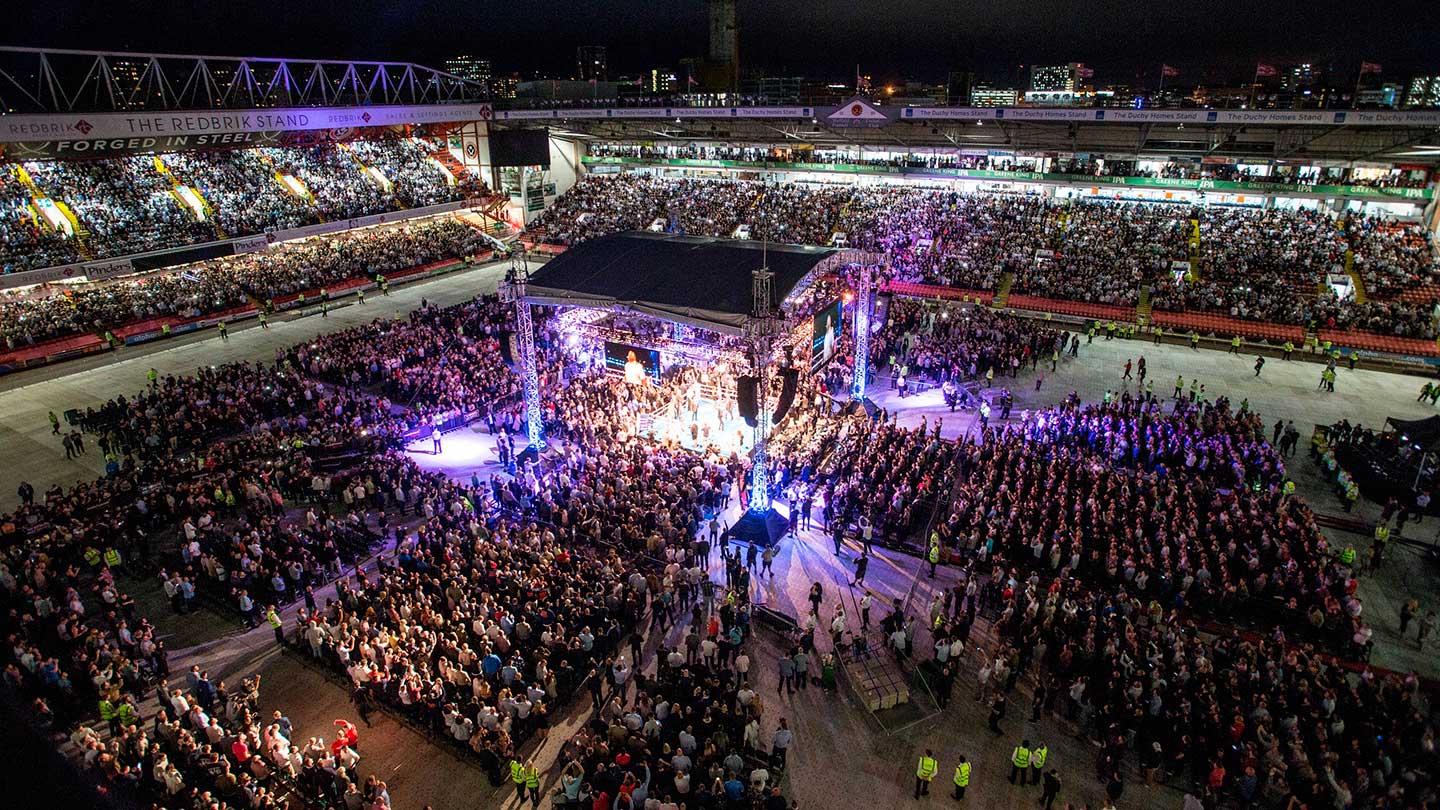
Bramall Lane – a venue of sporting firsts
Architectural Highlights and Renovations
Bramall Lane’s architecture mixes Victorian roots with modern updates. The original cricket pavilion evolved into football stands through phased renovations.
Highlights:
- Steel structures for durability, nodding to Sheffield’s heritage.
- Roof designs providing cover for most seats.
- Floodlights from the 1960s, upgraded for efficiency.
Post-1989 safety reports led to all-seating, reducing capacity but enhancing safety. Recent additions include better facilities without losing character.
This blend keeps the stadium Sheffield treasures functional.
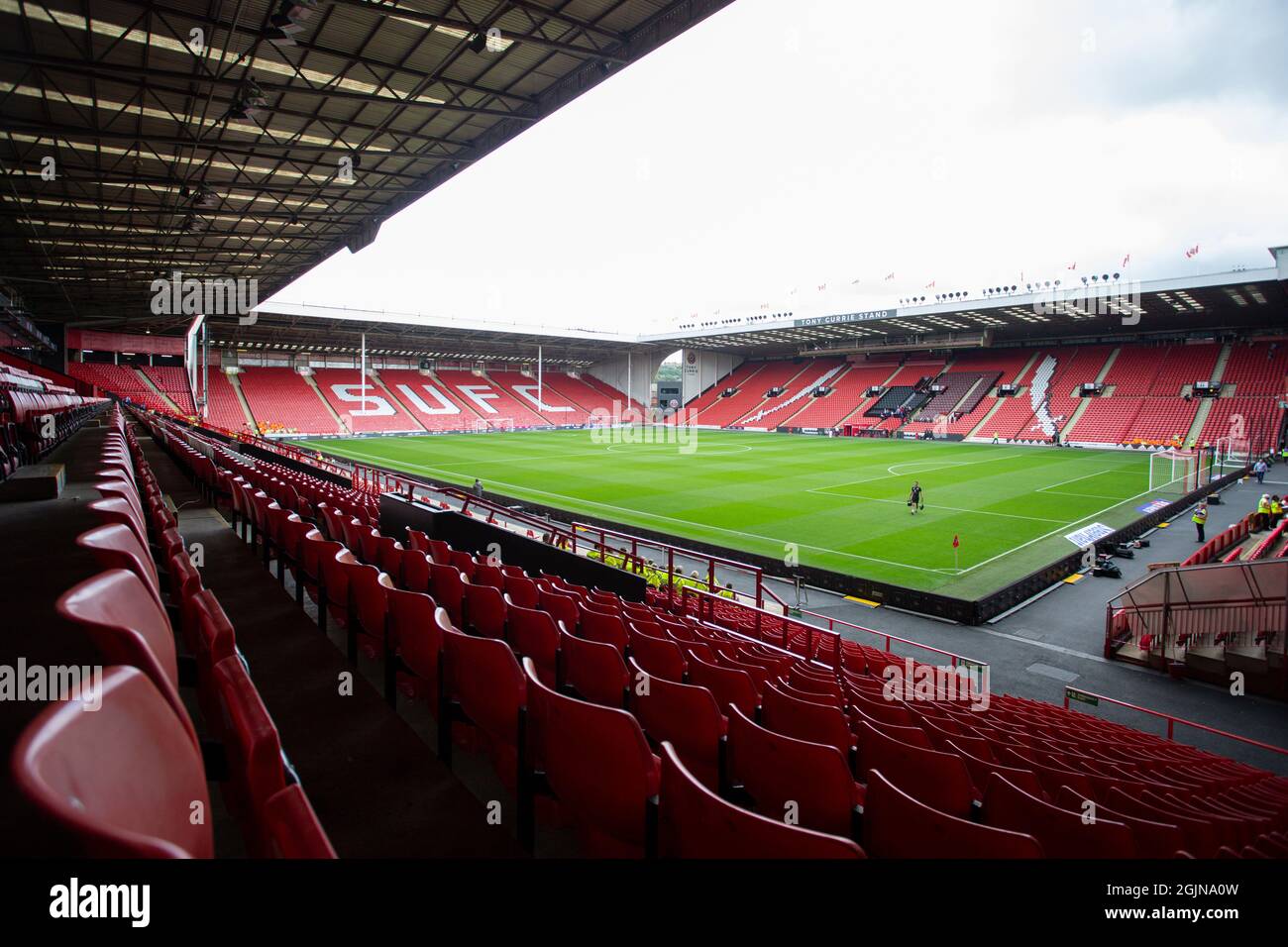
General interior view of Bramall Lane, home stadium of Sheffield United Stock Photo – Alamy
Visiting Bramall Lane: Tips for Fans
Planning a visit to this Sheffield United stadium? Arrive early to soak in the history. Use public transport—it’s near the city center.
Tips:
- Book tickets via official channels for best seats.
- Explore nearby pubs for pre-match vibes.
- Check weather; partial roofing means dress accordingly.
For families, the South Stand offers calm viewing. As a stadium Sheffield visitors love, tours highlight hidden gems.
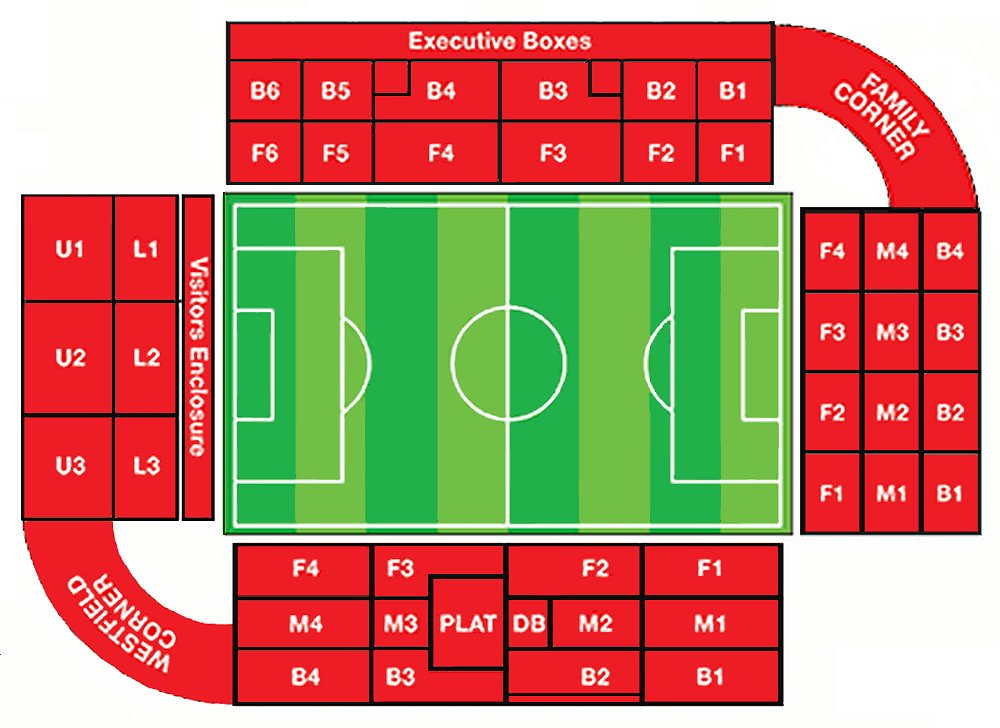
Sheffield United FC | Bramall Lane | Football League Ground Guide
Conclusion
Bramall Lane remains a timeless icon, from its 1855 origins to current 32,050 capacity. This Sheffield United stadium, with its rich history and thoughtful seating plan, captures football’s essence. Whether tracing its cricket past or enjoying modern matches, it offers enduring value.
Explore Bramall Lane on your next trip or dive into more football history posts on our blog.